posted
on 3/5/2026
in
BLOGS from St. Anthony
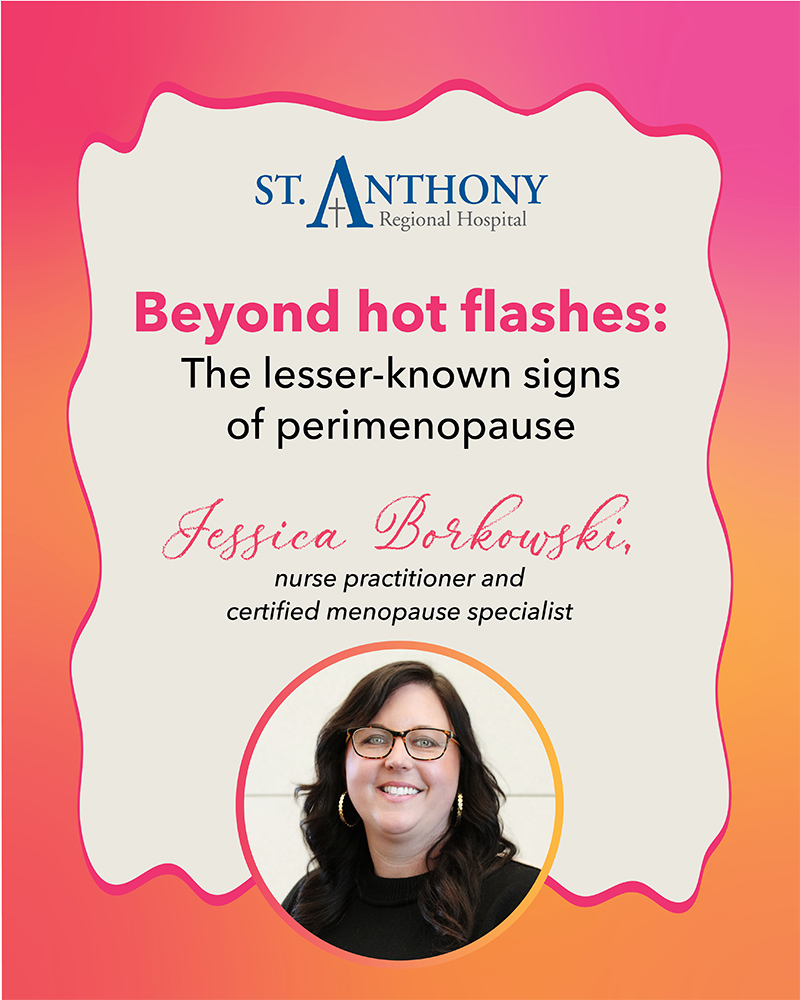 All these symptoms can point to perimenopause for women in their late 30s, 40s and early 50s. While many common signs of perimenopause — the transitional years before and shortly after menopause — are widely recognized, some symptoms can be more surprising.
Strange at times. Annoying almost always. Perimenopause symptoms can be complicated, but they shouldn’t overwhelm your lifestyle. At St. Anthony Regional Hospital, our practitioners understand what you’re going through and are ready to have open, comfortable conversations without the awkwardness.
Jessica Borkowski, an advanced registered nurse practitioner and Menopause Society Certified Practitioner at St. Anthony Clinic, helps women better understand what’s happening to their bodies during perimenopause. She shares the symptoms to watch for and walks through practical, evidence-based treatment options that can ease both the common — and often surprising — changes that come with this stage of life.
The Common, the Uncommon and Everything in Between
As a certified menopause practitioner, Borkowski understands that perimenopause and menopause can be physically challenging, emotionally taxing and often overwhelming. She has dedicated her career to guiding women through these transitions with clarity, compassion and evidence-based care.
“I am passionate about caring for women navigating midlife transitions, including perimenopause and menopause,” Borkowski says. “My goal is to create a safe space where women feel heard and supported, address their concerns with thoughtful guidance, and provide the education they need to move forward with confidence.”
Recognizing the signs is often the first step in understanding that your perimenopause journey may have begun.
The Classics
Borkowski explains that some of the most common symptoms of perimenopause may include, but are not limited to:
- Hot flashes
- Weight gain
- Night sweats
- Irregular periods
- Sleep changes
- Mood changes
- Low sex drive
- Changes in skin or hair
- Brain fog
And then there are symptoms that might catch you off guard.
The Unexpected
- Vaginal dryness, including pain with intercourse
- Muscle and joint aches
- Migraines
- Recurrent urinary infections
- Body odor changes
- Tingling sensation in the limbs
- Burning of the tongue (yes, just as it sounds!)
- Dry mouth and eyes
- Restless leg sensations
- Itchy skin
- Brittle nails
“One symptom can often blend into another,” Borkowski explains. “Some changes are more common during perimenopause, while others — such as hot flashes, night sweats, and vaginal dryness — may become more noticeable as the transition progresses. Symptoms can overlap and evolve over time, which can feel frustrating or confusing. For many women, this transition lasts an average of five to seven years, though every experience is unique.”
Relief is Around the Corner
Hearing that symptoms may last up to seven years or more can feel overwhelming, but relief is possible and available through St. Anthony.
“There’s a supportive and informed way to navigate this transition,” Borkowski says. “It starts with understanding what’s happening in your body and having an open conversation with a trusted provider. Together, you can create a personalized plan rooted in research and designed to help you feel your best.”
Treatment options for perimenopause and menopause symptoms include both hormone therapy and nonhormone therapy interventions:
- Hormone therapy: Estrogen, progesterone and testosterone
- Nonhormone therapy interventions: Can include medication (SSRIs/SNRIs, gabapentin and fezolinetant) and nonmedication approaches (hypnosis, biofeedback therapy, weight loss, healthy diet and exercise routines)
Even women without symptoms can benefit from understanding how perimenopause and menopause can affect long-term health.
“The most important message I want women to hear is not to be afraid of hormones,” Borkowski says. “There are many misconceptions about hormone therapy, but understanding your options is key. Education empowers you to make informed decisions — not just to manage your symptoms today, but to support your long-term health and quality of life.”
Ready to start the conversation about your perimenopause or menopause journey? Connect with Borkowski and her team at 712-794-2222 to set up a consultation. You’ll find personalized, compassionate and completely judgment-free care that’s just a phone call away.